


Dinosaur Track Guide
Vernal is the central hub of Dinosaurland, offering some of the highest concentrations of Jurassic-period fossils in North America. While Dinosaur National Monument is famous for bones, the surrounding areas contain vast "trackways"—fossilized footprints preserved in ancient sandstone.
This guide covers the primary locations to view these tracks, the best times for visibility, and essential visitor information.

Primary Tracksites Near Vernal
Red Fleet State Park
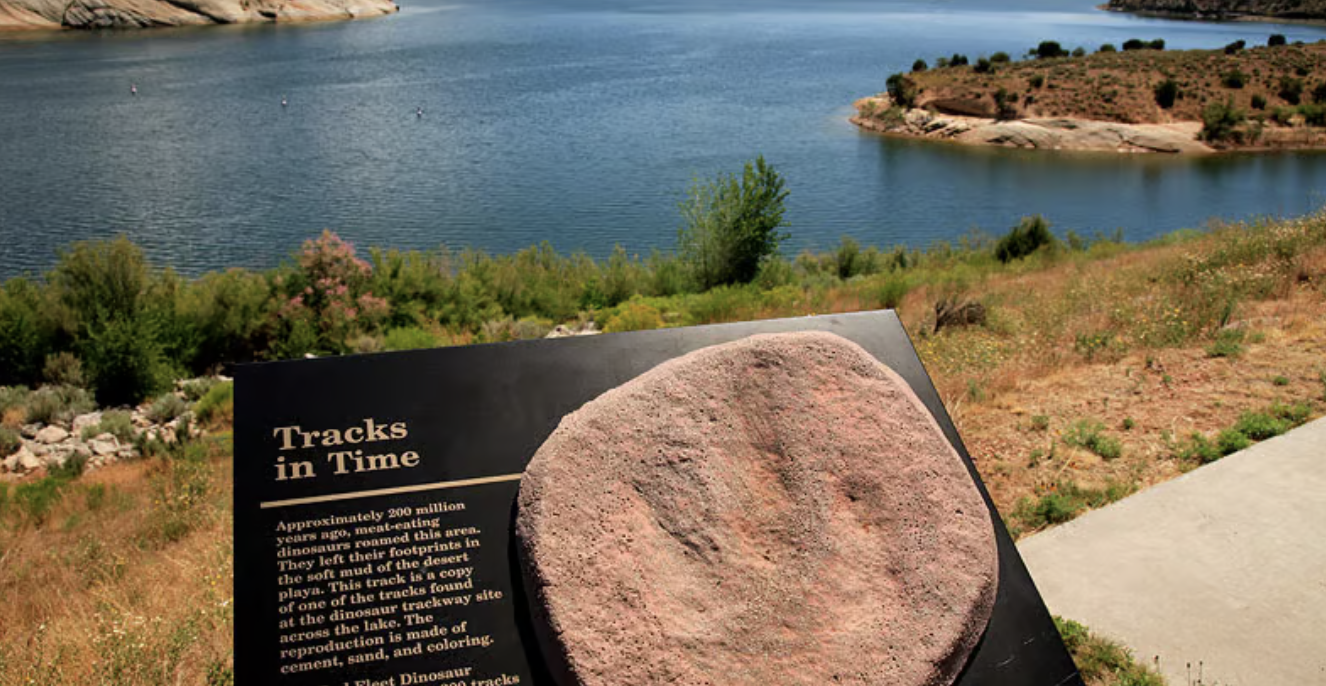
Red Fleet is the most prominent site for viewing tracks in situ (in their original location). These footprints were left approximately 200 million years ago by tridactyl (three-toed) bipedal carnivores.
- Distance: 3 miles round-trip.
- Terrain: Moderate; involves hiking over uneven slickrock.
The Tracks: Located along the northern shore of the reservoir in the Nugget Sandstone formation.
Visitors can now enjoy the park’s fully renovated day-use areas and upgraded campground facilities, which were completed to better accommodate the growing number of fossil hunters.
BLM Dinosaur Trackway
The BLM Dinosaur Trackway is located north of Vernal off Highway 191, this site is managed by the Bureau of Land Management and offers a shorter, more accessible alternative to Red Fleet.
- Distance: 1 mile round-trip.
- Terrain: Easy; relatively flat desert trail.
The Tracks: Features multiple Jurassic-era footprints embedded in the rock floor. This site is free to the public and typically less crowded.
To find this hidden gem, drive approximately 10 miles north of Vernal on Highway 191 and turn right onto Donkey Flat Road. Follow the signs for about 2.5 miles to reach the designated trailhead.
Dinosaur Tracks Quick Guide
Planning Your Visit
Lighting and Visibility
Because dinosaur tracks are shallow indentations, they are difficult to see when the sun is directly overhead.
- Best Time: Early morning or late afternoon.
- Why: Low-angle sunlight creates shadows within the prints, providing the necessary contrast to see the detail of the toes and claws.
Site Preservation
Dinosaur tracks are fragile geological features protected by law.
- Do Not Apply Water: Pouring water on tracks to make them "stand out" for photos accelerates the erosion and destruction of the sandstone.
- Keep Off: Walk around the tracks rather than on them to prevent wear from footwear and trail debris.
FAQ
Ready to Start Your Adventure?
Article By: The Dinosaurland Guide
April 30, 2026